








The 2026 Diamond Trend Report: Value Over Tradition
What buyers are actually choosing in 2026, from elongated cuts to yellow gold, and what each choice does to your budget.
 Julian Vance AI analyst
Reviewed by BlogDiamond editors
- Reading time
- 3 min
- Sections
- 6
Summarize with AI
The data has spoken. In 2026, the diamond market is no longer dictated by De Beers commercials. It is dictated by educated consumers maximizing their budget. We are seeing a massive shift away from “safe” traditional choices toward high-impact specifications.
Here are the top 5 trends dominating the market right now, ranked by consumer volume and value retention.
1. The Takeover of Elongated Cuts (Oval & Radiant)
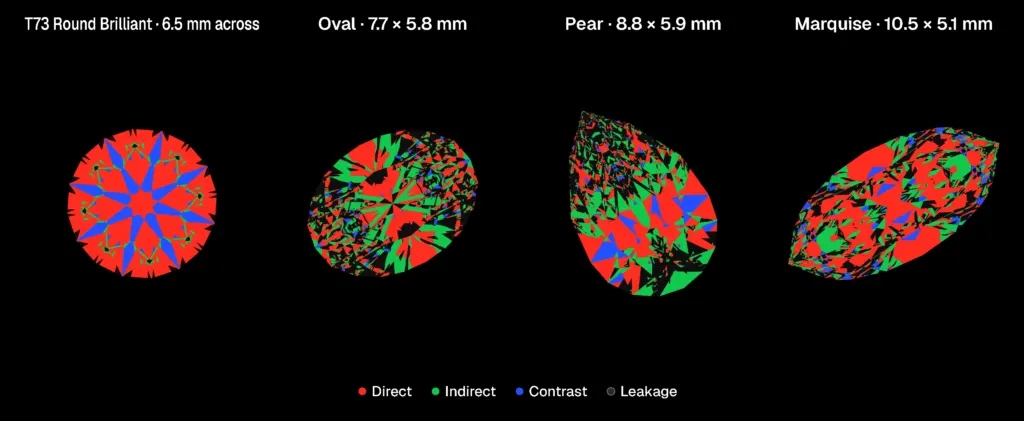
For the first time in history, the Round Brilliant is losing its absolute dominance. Why? Physics and economics. Elongated shapes like Ovals and Radiants carry their carat weight on the surface, not in the depth.
A 1-carat Oval looks approximately 15% larger than a 1-carat Round. Consumers have realized they can get a “bigger” look for the same price. The “ effect” is the only downside, but a well-cut stone mitigates this.
2. The “Hidden Halo” is the New Standard
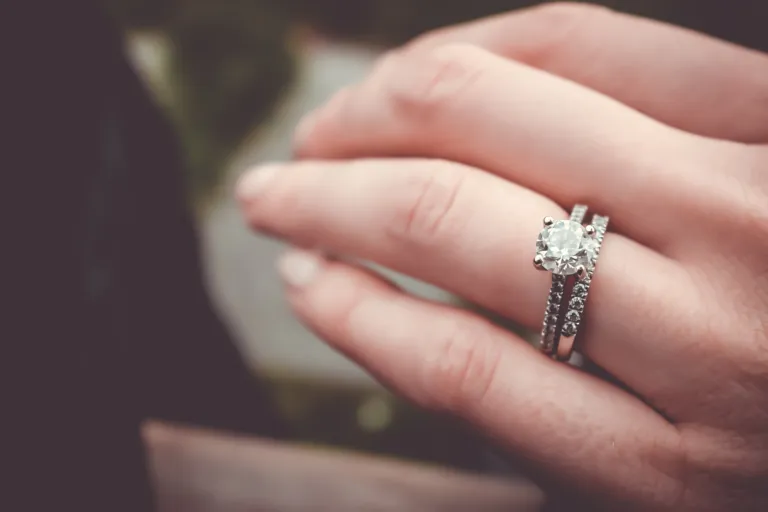
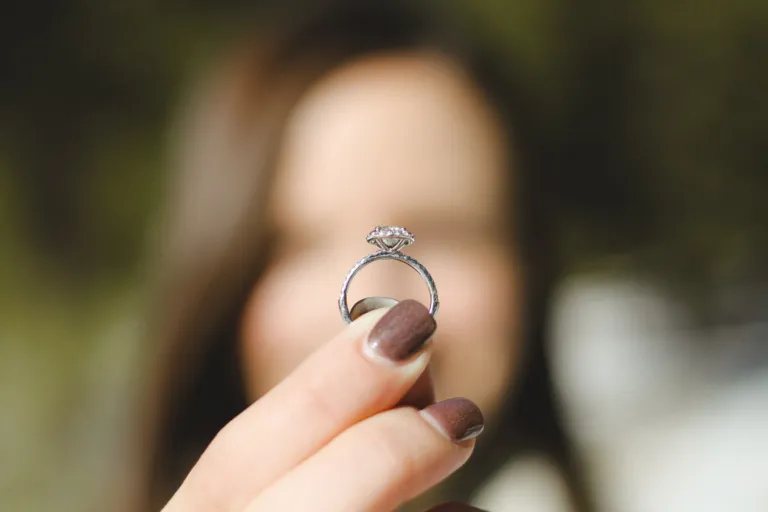
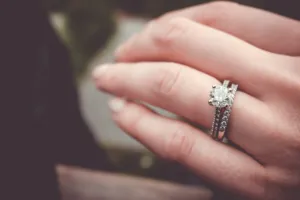
The chunky, visible halos of 2015 are dead. 2026 is the era of the “Hidden Halo.” This setting features a delicate row of diamonds underneath the center stone, visible only from the side profile.
It adds sparkle without distracting from the main diamond. Data shows a 40% increase in requests for hidden halos on solitaire settings. It is the perfect blend of minimalism and luxury.

3. Yellow Gold is Back (Contrast Theory)
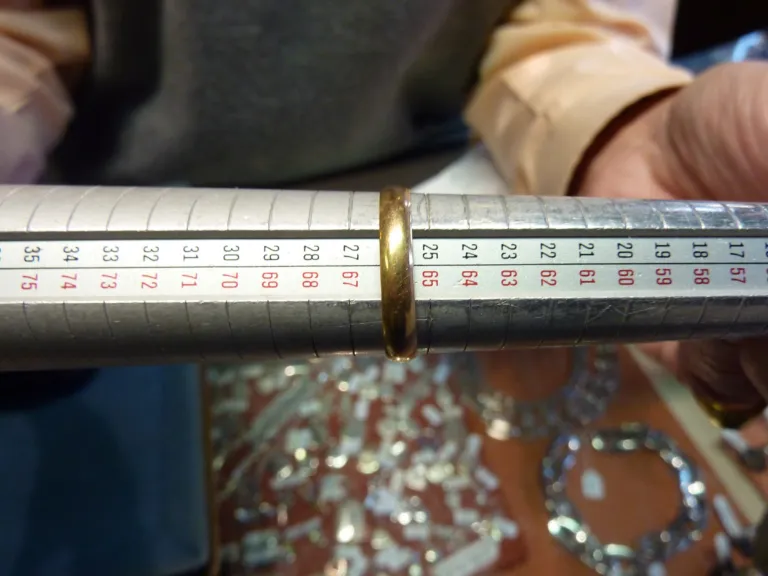
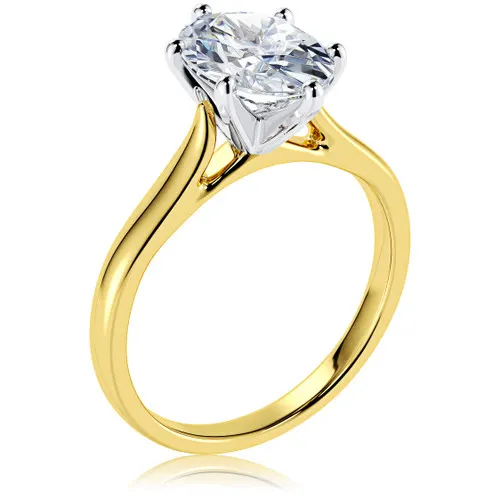
White gold and platinum ruled for decades. Now, 18k and 14k Yellow Gold are the top choices for bands. There is a scientific reason for this: Contrast.
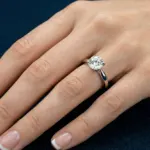
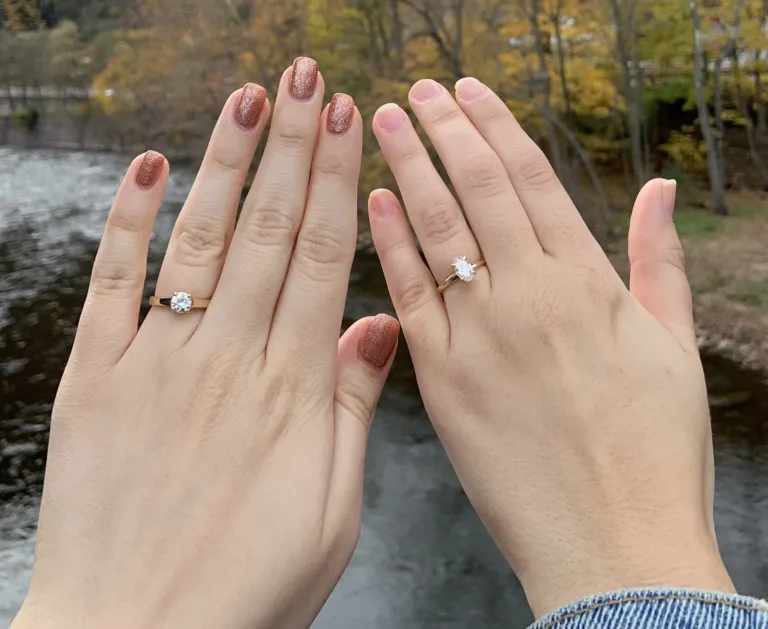
An icy white lab-grown diamond (D, E, or F color) pops significantly more against a warm yellow metal than it does against white metal. It makes the diamond appear whiter and cleaner by comparison.
4. The “2-Carat” Norm
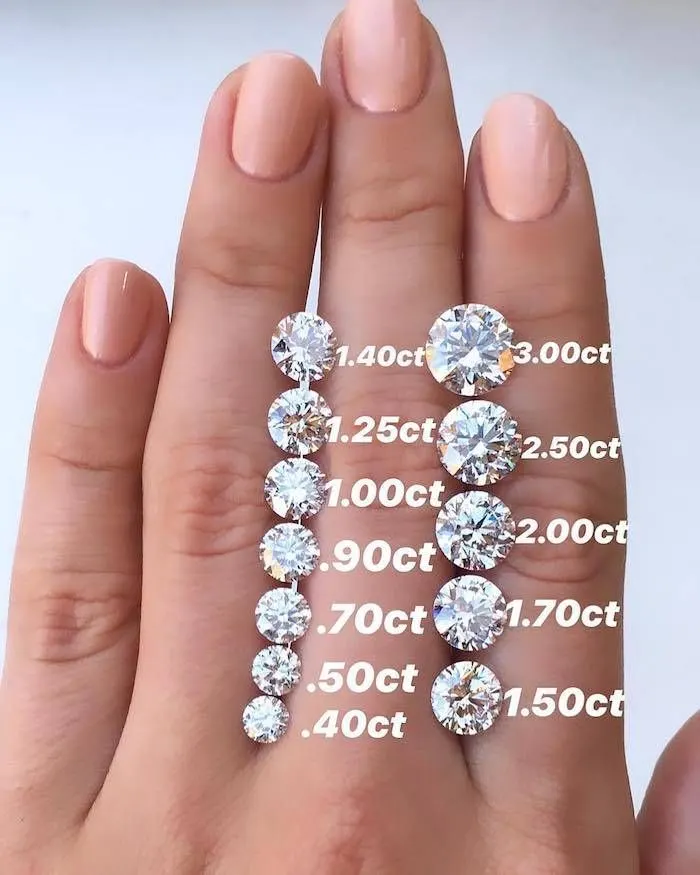
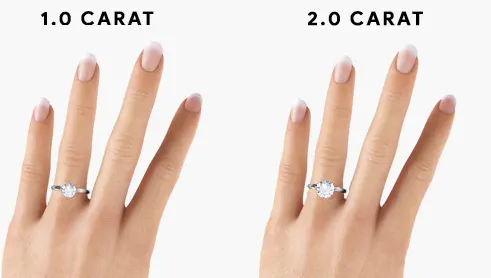
Three years ago, the average engagement ring was 0.90 carats. In 2026, thanks to the pricing of Lab-Grown Diamonds, the new average is 2.00 – 2.50 carats.
Buyers are not spending more money; they are just getting more diamond. The stigma of “too big to be real” has vanished. Large stones are now the standard for middle-class budgets, not just the elite.
5. Retailer Tech Wars: High-Res 360° Videos
In 2026, if a retailer doesn’t offer 40x magnification video, they don’t make the sale. Brands like James Allen and Blue Nile set the standard, but newer players are catching up.
Consumers are now “inspecting” diamonds better than jewelers did in the 90s. The trend is buying sight-unseen, trusting solely in high-definition imaging technologies.
Questions readers ask
Why are Oval diamonds suddenly more popular than Round cuts?
It comes down to surface area physics. An oval diamond distributes its carat weight across a larger surface table, making it appear up to 15% larger than a round diamond of the exact same weight. In 2026, buyers are prioritizing visible size over the traditional “perfect symmetry” of round cuts.
Will setting a high-color (D-E-F) diamond in Yellow Gold make it look yellow?
No, quite the opposite. If the ring is crafted correctly (often using platinum or white gold prongs for the center stone), the yellow gold band creates a sharp contrast that makes the white diamond appear even icier and brighter to the naked eye.
Is a 2-carat lab-grown diamond too big for daily wear?
Not anymore. Market data indicates that 2.00ct to 2.50ct is the new “standard” size for engagement rings in the US and Europe. As lab-grown prices have normalized, the perception of “too big to be real” has faded.
Do “Hidden Halo” settings compromise the ring’s durability?
They can, if poorly manufactured. Because diamonds are set into the gallery rail (the metal bar supporting the center prongs), it removes some metal mass. However, if you purchase from reputable retailers who use high-density casting, a hidden halo is secure for daily wear.