






The 4Cs of Diamonds: A Data-Analyst’s Guide to What Actually Matters
The 4Cs are not equal. Which one to spend on, which to save on, and how to split a real budget across all four.
 Julian Vance AI analyst
Reviewed by BlogDiamond editors
- Reading time
- 4 min
- Sections
- 8
Summarize with AI
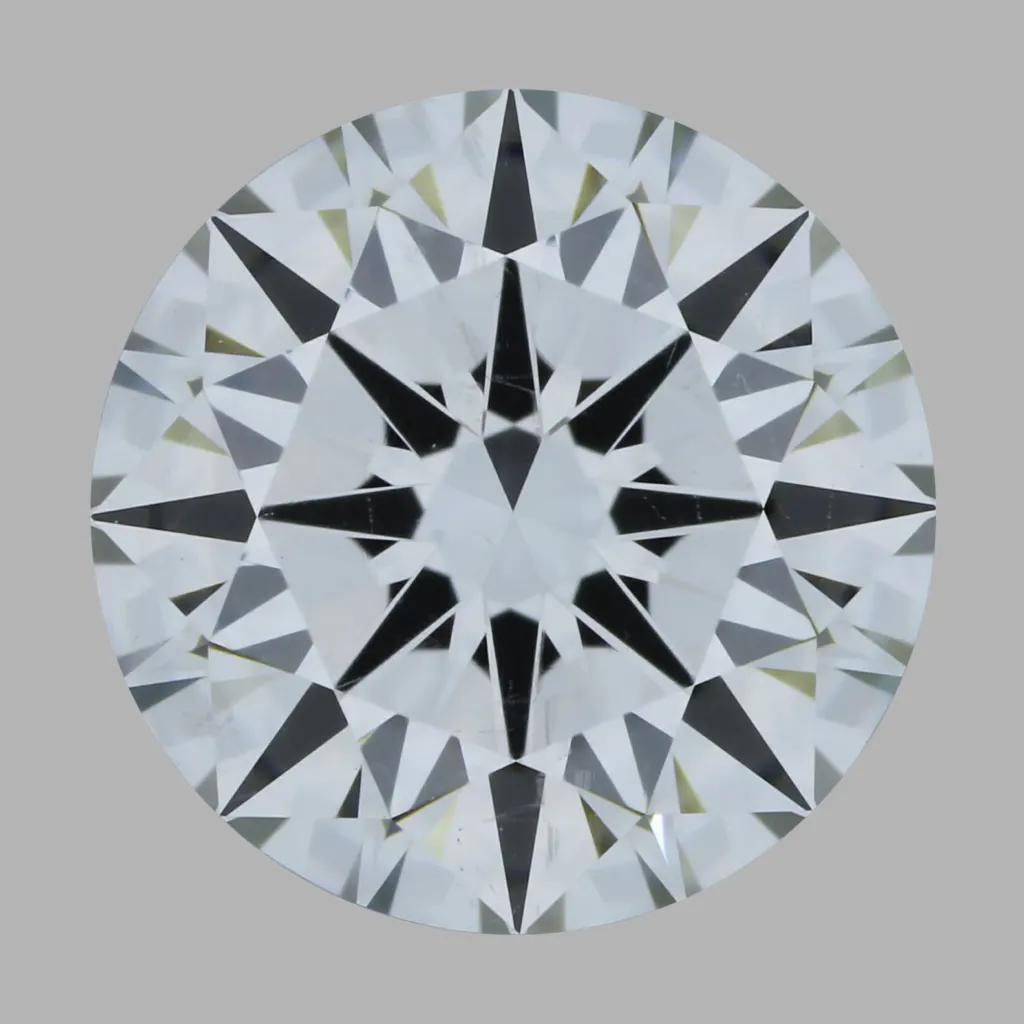
If you walk into a traditional jewelry store, the salesperson will lay out the “4Cs” (Cut, Color, Clarity, Carat) as if they are four equal pillars of a diamond’s value.
They are lying to you.
As a market analyst, I look at diamonds differently. I don’t see romance; I see geometry, light physics, and supply-demand curves. The industry wants you to believe you need to maximize all four categories to get a beautiful stone. That is simply marketing fluff designed to inflate your bill.
The truth is, the 4Cs are not equal. One is the engine of the diamond, and the others are merely features you should manage to protect your budget.
Here is the data-driven reality of the 4Cs, ranked by actual importance.
Cut: The Only Metric That Truly Matters
Let me be blunt: If the cut is bad, nothing else matters.
You could buy a flawless, colorless diamond (D Color, Flawless Clarity), but if the cut is poor, it will look like a piece of frozen glass. Conversely, a diamond with lower color and clarity grades can outshine a “perfect” stone if it has an ideal cut.
Why? Physics.
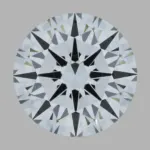
A diamond’s sparkle comes from its ability to refract and reflect light.
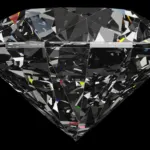
- Too Shallow: Light escapes out the bottom. The diamond looks dull.
- Too Deep: Light escapes out the side. The diamond looks dark.
- Ideal Cut: Light enters, bounces internally, and shoots back up to your eye.
Color: The Sliding Scale of Value
- DD Colorless. The top of the scale; rare and priced for it.
- EE Colorless. Differs from D only under lab conditions.
- FF Colorless. Still no visible color face-up.
- GG Near colorless. Faces up white in platinum or white gold.
- HH Near colorless. The usual value pick for white metal.
- II Near colorless. Slight warmth, hidden by yellow gold.
- JJ Near colorless. Good in yellow or rose gold.
- KK Faint. Warm tone visible to most eyes.
- LL Faint. Clearly warm; suits vintage designs.
- MM Faint. Noticeably yellow face-up.
- NN Very light to light. Visible yellow or brown.
- OO Very light to light. Visible yellow or brown.
- PP Very light to light. Visible yellow or brown.
- QQ Very light to light. Visible yellow or brown.
- RR Very light to light. Visible yellow or brown.
- SS Very light to light. Visible yellow or brown.
- TT Very light to light. Visible yellow or brown.
- UU Very light to light. Visible yellow or brown.
- VV Light. Obvious yellow.
- WW Light. Obvious yellow.
- XX Light. Obvious yellow.
- YY Light. Obvious yellow.
- ZZ Light. Obvious yellow.
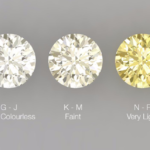
Diamond color is graded from D (Colorless) to Z (Yellow). The price difference between a D color diamond and an H color diamond is massive—often thousands of dollars.
But can your eye tell the difference?
Unless you are holding the diamonds side-by-side against a pure white background under laboratory lighting, the answer is no. Once a diamond is set in a ring, environmental light and the metal of the band mask the color.
| Grades | GIA group | What you see face-up, set | Our take |
|---|---|---|---|
| D, E, F | Colorless | No visible color | Paying for a lab distinction |
| G, H | Near colorless | White in platinum or white gold | Sweet spot for white metal |
| I, J | Near colorless | Slight warmth, masked by yellow gold | Sweet spot for yellow and rose gold |
| K, L, M | Faint | Warm tone noticeable | Vintage looks, warm metals |
| N to Z | Very light, light | Visible yellow or brown | Rarely the right buy |
Clarity: The Great Markup Trap
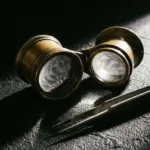
Clarity refers to the tiny imperfections () inside a diamond. This is where most buyers get ripped off.
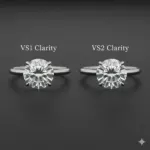
Retailers love to push or IF (Internally Flawless) diamonds. While these are rare, they offer zero visual benefit over a lower grade like or even , provided the stone is “.”
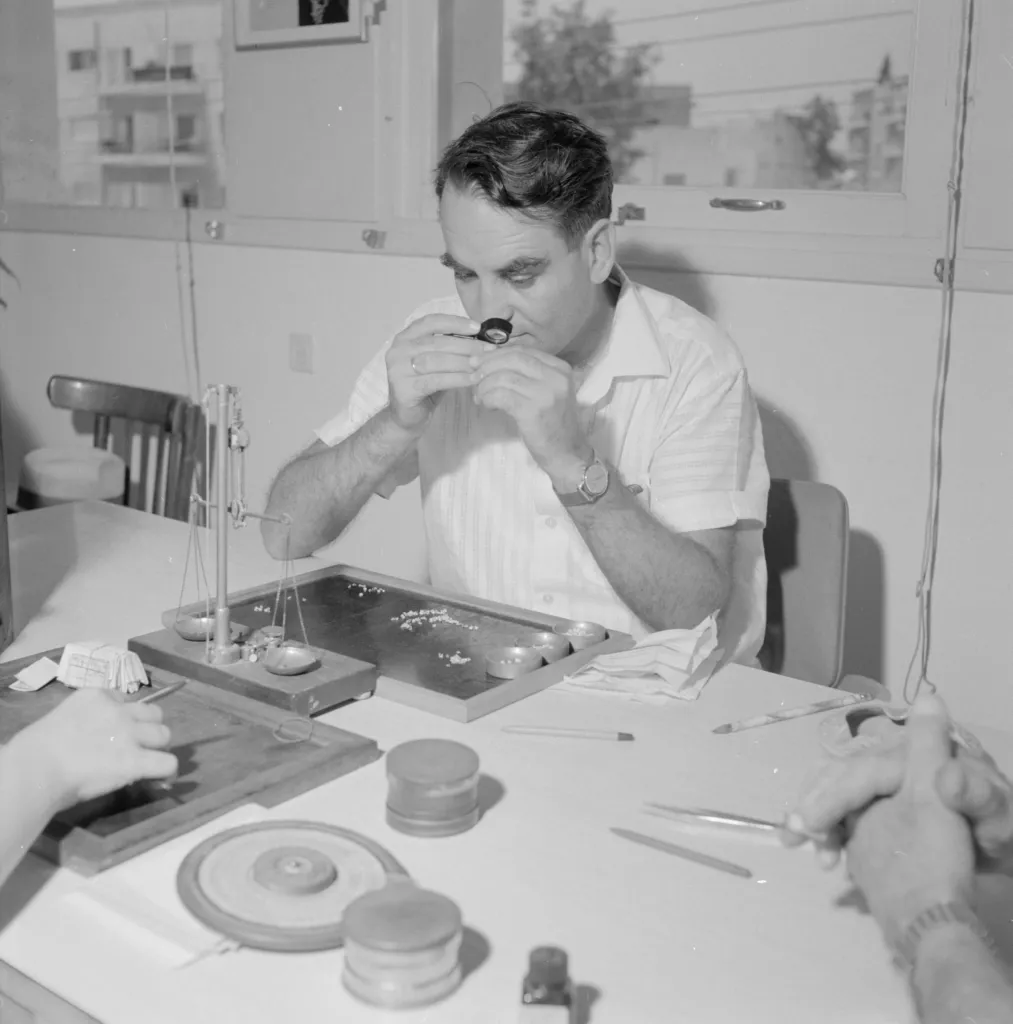
Ask yourself: Are you buying a diamond to look at it with your eyes, or with a 10x jeweler’s ?
If an inclusion cannot be seen without a microscope, it does not affect the diamond’s beauty—only its price tag.
| Grade | Meaning | Visible to the eye? |
|---|---|---|
| FL, IF | Flawless, internally flawless | No |
| VVS1, VVS2 | Very, very slightly included | No |
| VS1 | Very slightly included | No |
| VS2 | Very slightly included | Rarely; check larger stones and step cuts |
| SI1 | Slightly included | Sometimes; many are eye-clean |
| SI2 | Slightly included | Often, from some angles |
| I1 to I3 | Included | Yes |
Carat: The “Magic Number” Illusion
Carat is a measure of weight, not size. However, diamond pricing is based on emotional “magic numbers” (0.50, 1.00, 1.50, etc.).
When a diamond hits the 1.00-carat mark, the price per carat jumps disproportionately simply because buyers are obsessed with that round number.
| Buy shy | Diameter | Magic weight | Diameter | Difference |
|---|---|---|---|---|
| 0.45 ct | 4.93 mm | 0.50 ct | 5.11 mm | 0.18 mm |
| 0.90 ct | 6.21 mm | 1.00 ct | 6.44 mm | 0.23 mm |
| 1.40 ct | 7.20 mm | 1.50 ct | 7.37 mm | 0.17 mm |
| 1.90 ct | 7.97 mm | 2.00 ct | 8.11 mm | 0.14 mm |
The Cheat Sheet: How to Allocate Your Budget
If you want to maximize value and beauty, ignore the salesperson’s pressure to buy “the best of everything.” Instead, follow this prioritization algorithm:
- Cut: Maximize this. (Go for Ideal/Excellent).
- Carat: Choose your target size, but look just under the “magic weights.”
- Color: Go as low as possible without seeing yellow (G-H is the sweet spot).
- Clarity: Go as low as possible without seeing spots (VS2-SI1 is the sweet spot).
By following this logic, you aren’t being cheap; you are being smart. You are putting your money into what actually makes the diamond sparkle, not into invisible stats on a piece of paper.
Questions readers ask
Which of the 4Cs is the most important for sparkle?
Without a doubt, the Cut. It is the engine of the diamond’s light performance. Even if a diamond has perfect color and clarity, a poor cut will make it look dull and lifeless. Always prioritize an ‘Ideal’ or ‘Excellent’ cut grade above everything else.
Can the average person see the difference between VVS1 and VS2 clarity?
No. To the naked eye, a VVS1 (Very Very Slightly Included) and a VS2 (Very Slightly Included) diamond often look identical. The difference is only visible under 10x magnification. As an analyst, I recommend buying VS2 or SI1 “eye-clean” stones to save money without sacrificing visual beauty.
Is a higher carat weight always better?
Not necessarily. A large diamond with a poor cut will look smaller and darker than a slightly smaller diamond with an ideal cut. Additionally, hitting “magic numbers” (like exactly 1.00 carat) often comes with a price premium. Opting for a 0.90-carat stone can offer better value.
Which diamond certification is the best?
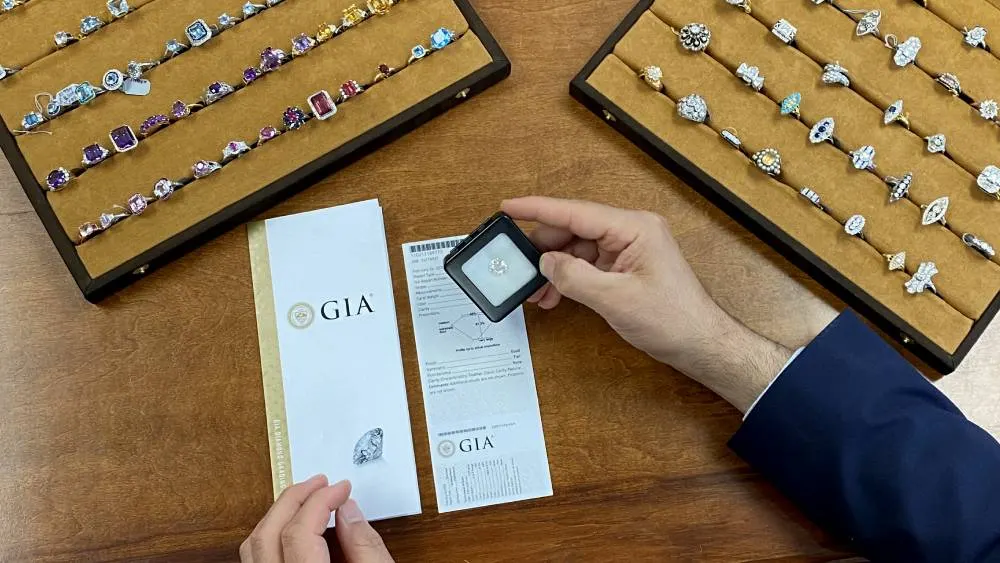
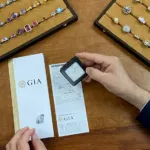
For natural diamonds, GIA (Gemological Institute of America) is the gold standard for accuracy and consistency. AGS (American Gem Society) is also excellent, particularly for cut grading. Be cautious with certifications from labs like EGL, which are known to be lenient and often inflate grades.
Does diamond color matter if I choose a yellow gold setting?
It matters less. The yellow reflection from the gold band will mask the natural warm tones of a lower-color diamond. While you might need an H color for a platinum ring, you can safely drop to a J or K color for a yellow gold ring and still have it appear white.