



Diamond glossary
44 terms from grading reports and jeweler counters, defined in a sentence or two, linked to the guides that use them.
A
- AGSlab
- American Gem Society. Its laboratory grades cut on a 0–10 scale, where 0 is Ideal; known for light-performance analysis such as ASET imaging.The 4Cs of Diamonds
- ASETtool
- Angular Spectrum Evaluation Tool. A colour-coded image showing where a diamond gathers light and where it leaks it.The 4Cs of Diamonds
- Asscher cutshape
- A square step cut with cut corners and a deep pavilion, producing a 'hall of mirrors' look.
B
- Bow-tiecut
- A dark area shaped like a bow tie across the centre of elongated shapes such as ovals, pears and marquises.The 2026 Diamond Trend Report
- Brilliancelight
- The white light a diamond returns to the viewer. Driven mainly by cut proportions.The 4Cs of Diamonds
C
- Carat4Cs
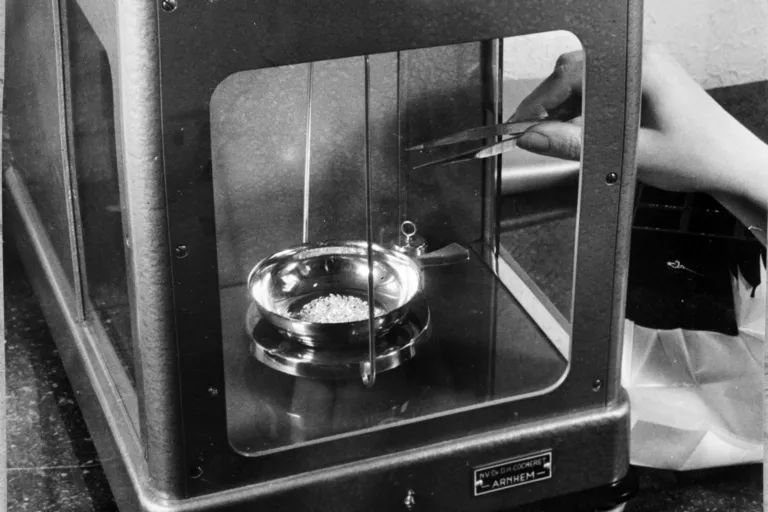
- A unit of weight: 1 carat = 200 milligrams = 0.2 grams. It measures weight, not size.The 4Cs of Diamonds3 Carat Diamond Price Guide 2026
- Clarity4Cs
- How free a diamond is from inclusions and blemishes, graded from Flawless (FL) to Included (I3) under 10× magnification.VS1 vs VS2 Diamond Clarity
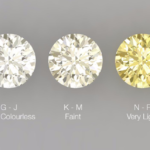
- Colour4Cs
- For white diamonds, the absence of colour, graded D (colourless) to Z (light yellow or brown) on the GIA scale.Diamond Color Grade Chart
- Crownanatomy
- The upper part of a diamond, above the girdle, containing the table and crown facets.
- Culetanatomy
- The point or small facet at the bottom of the pavilion. 'None' or 'Pointed' is standard on modern rounds.
- Cut grade4Cs
- A grade for how well a diamond's proportions, symmetry and polish handle light. GIA's top grade for rounds is Excellent; AGS's is Ideal (0).The 4Cs of Diamonds
- CVDlab-grown
- Chemical vapour deposition. Diamond is grown layer by layer from a carbon-rich gas onto a diamond seed plate.Lab Grown Diamonds
D
- Depth %proportion
- Total depth divided by average diameter. Rounds commonly sit around 59–63%.The 4Cs of Diamonds
- Dispersionlight
- The splitting of white light into spectral colours, seen as 'fire'. Diamond's dispersion is 0.044.Moissanite vs. Lab Grown Diamond
E
- Emerald cutshape
- A rectangular step cut with long parallel facets and cut corners. Shows clarity more openly than brilliant cuts.
- Eye-cleanclarity
- No inclusions visible to the unaided eye at normal viewing distance. Not a lab grade; it must be checked per stone.VS1 vs VS2 Diamond Clarity
F
- Fancy colourcolour
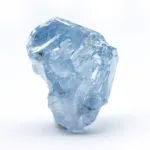
- Diamonds with colour beyond the Z range or in other hues (blue, pink, yellow), graded on a separate scale.Blue Diamonds
- Firelight
- The flashes of spectral colour produced by dispersion.
- Fluorescencecolour
- A glow, usually blue, under ultraviolet light. Graded None to Very Strong; strong fluorescence can make some stones look hazy.
G
- GIAlab
- Gemological Institute of America. Created the 4Cs and the D–Z colour scale; the reference lab for natural diamonds.The 4Cs of DiamondsWhat Exactly Is an IGI Certified Diamond?
- Girdleanatomy
- The narrow band around a diamond's widest point, where report numbers are often laser-inscribed.
H
- Hearts and arrowscut
- A pattern seen through a special viewer in precisely cut rounds: eight arrows face-up, eight hearts face-down.The 4Cs of Diamonds
- HPHTlab-grown
- High pressure, high temperature. A growth method that recreates mantle-like conditions; also used to treat colour.Lab Grown Diamonds
I
- IGIlab
- International Gemological Institute, founded in Antwerp in 1975. Grades a large share of laboratory-grown diamonds.What Exactly Is an IGI Certified Diamond?
- Inclusionclarity
- A feature inside a diamond, such as a crystal, feather or cloud, formed during growth.VS1 vs VS2 Diamond Clarity
L
- Lab-grown diamondlab-grown
- Diamond crystal produced in a laboratory by HPHT or CVD, with the same chemical and optical properties as natural diamond.Lab Grown DiamondsThe 50% Tipping Point
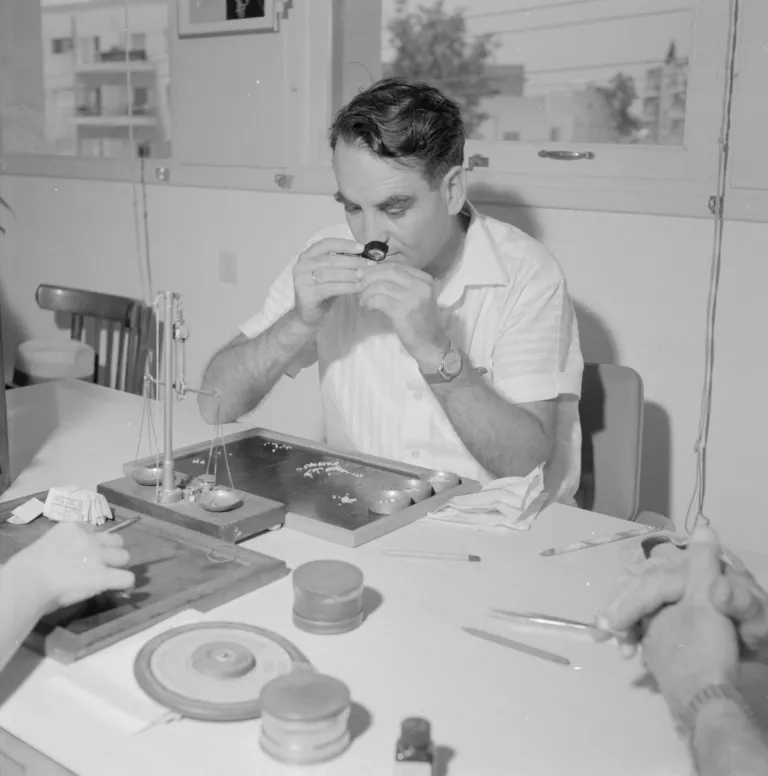
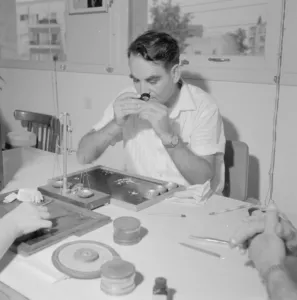
- Loupetool
- A small magnifier; the 10× loupe is the standard for clarity grading.5 Tools You Need to Inspect a Diamond Like a Pro
M
- Magic weightscarat
- Round-number weights such as 0.50, 1.00 and 1.50 ct, where price per carat jumps. Stones just below cost noticeably less.The 4Cs of Diamonds
- Marquiseshape
- A boat-shaped brilliant with pointed ends; long and spreads well for its weight.
- Moissanitesimulant
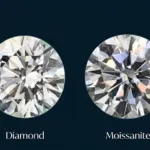
- Silicon carbide. Not a diamond: it is doubly refractive and shows stronger, more colourful fire.Moissanite vs. Lab Grown Diamond
O
- Ovalshape
- An elongated brilliant. Faces up larger than a round of the same weight; watch for a bow-tie.The 2026 Diamond Trend Report
P
- Pavilionanatomy
- The lower part of a diamond, below the girdle. Its angle largely decides whether light returns or leaks.The 4Cs of Diamonds
- Pearshape
- A teardrop-shaped brilliant combining a round end and a point.
- Princess cutshape
- A square or near-square brilliant with pointed corners.
R
- Radiant cutshape
- A rectangular or square shape with cut corners and brilliant faceting.
- Rapaportmarket
- A widely used wholesale diamond price list that dealers trade against, usually at a discount.RapNet AlternativeCurrent Diamond Prices
- Refractive indexlight
- How strongly a material bends light. Diamond's is 2.42.
- Round brilliantshape
- The 57- or 58-facet round cut engineered for maximum light return; the most popular shape.The 4Cs of Diamonds
S
- Scintillationlight
- The sparkle pattern of light and dark flashes as the diamond, light or viewer moves.
- SI1 / SI2clarity
- Slightly included. Inclusions are noticeable under 10× and sometimes, especially in SI2, to the eye.VS1 vs VS2 Diamond Clarity
T
- Tableanatomy
- The large flat facet on top. Table % is its width relative to the stone's diameter.
- Tennis braceletjewelry
- A flexible line bracelet of evenly matched diamonds.Diamond Tennis Bracelet 2026
V
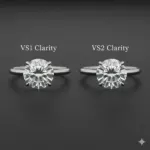
- VS1 / VS2clarity
- Very slightly included. Minor inclusions that are difficult (VS1) to somewhat easy (VS2) to see under 10×.VS1 vs VS2 Diamond Clarity
- VVS1 / VVS2clarity
- Very, very slightly included. Inclusions so slight they are difficult for a skilled grader to see under 10×.VS1 vs VS2 Diamond Clarity
No term matches. Try a shorter word, or search the guides.