














The Truth About Buying Diamonds Online: Are You Being Scammed or Saved?
Is it safe to spend thousands on a diamond you have only seen on a screen? What to check, what protects you and when to walk away.
 Julian Vance AI analyst
Reviewed by BlogDiamond editors
- Reading time
- 3 min
- Sections
- 8
Summarize with AI
Let’s address the elephant in the room.
You are sitting behind a screen, looking at a sparkling image of a stone that costs as much as a used Honda Civic, and you’re wondering if you’re out of your mind. You’ve got the credit card in one hand and a healthy dose of skepticism in the other.

The old guard—the guys in the brick-and-mortar stores with the velvet trays and the perfectly positioned halogen lights—want you to believe that buying a diamond online is the Wild West. They want you to think it’s unsafe, impersonal, and risky.
They are lying to you.
Here is the cold, hard reality: buying a diamond online isn’t just “safe” in 2026; it is statistically the only way to ensure you aren’t overpaying by 40% for a mediocre rock. But you have to play by the rules.
Here is how to navigate the digital diamond market without getting burned.
The “Touch and Feel” Myth
The biggest argument against online buying is, “I need to see it in person.”
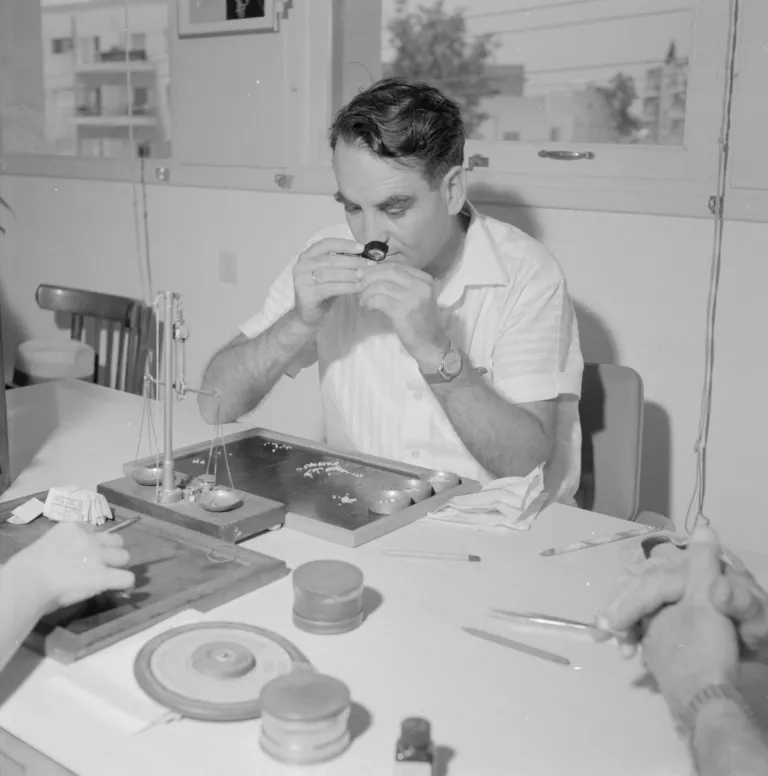
Do you? Really? Unless you are a trained gemologist carrying a in your pocket, your eyes are going to deceive you. In a jewelry store, the lighting is engineered to make even a cloudy piece of frozen spit look like the Hope Diamond.
Online retailers have leveled the playing field. The top-tier players (think James Allen, Blue Nile, Whiteflash) now use high-definition, 360-degree imaging and macro photography. You are seeing the diamond at 20x or 40x magnification. You are seeing that the naked eye would miss in a store. You aren’t just seeing the diamond; you are inspecting it better than the jeweler is.
Rule #1: No Independent Lab Report, No Deal
This is non-negotiable. If you take nothing else from this article, take this.
The internet is safe only if the diamond comes with a grading report from a Tier 1 laboratory.
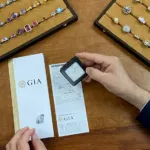
- (Gemological Institute of America)
- (American Gem Society)
If a website tries to sell you a diamond certified by “EGL” or their own “In-House Gemologists,” close the tab. Those certificates are often inflated. A diamond graded as a “VS1” by a lax lab might actually be an “SI2” by GIA standards. That difference is thousands of dollars out of your pocket.
Pro Tip: Never buy based on the “specs” listed on the page. Buy based on the PDF of the official report linked on that page.
The Safety Net: Shipping and Returns
“But what if it gets stolen in the mail?”
It won’t. And if it does, it’s not your problem. Legitimate online diamond retailers use discreet shipping (FedEx/UPS) that is fully insured. The box doesn’t say “EXPENSIVE DIAMOND INSIDE.” It usually comes from a generic fulfillment name.
More importantly, check the Return Policy. A reputable dealer offers a 30-day, no-questions-asked return window. This turns your living room into the showroom. You buy it, you look at it in natural lighting (away from the sales tactics), and if it doesn’t sing to you, you send it back. No harm, no foul.
Why The Price is Better (The Economics)
Why are online diamonds cheaper? It’s not because they are lower quality. It’s because they don’t pay rent for a storefront in a high-end mall.
- Brick & Mortar Markup: High overhead (staff, rent, electricity, inventory holding costs).
- Online Model: Drop-shipping model or centralized inventory.
You are saving 20% to 40% simply because you aren’t subsidizing the store’s marble floors.
The Checklist: How to Buy Without Fear
If you’re ready to pull the trigger, follow this protocol to ensure total safety:
- Verify the URL: Ensure you are on a major, recognized retailer.
- Check the Certificate: Match the GIA number on the diamond to the digital report.
- Inspect the Media: If there is no actual video of the diamond (just a stock photo), skip it.
- Customer Service: Test them. Call their support line. Ask for a gemologist’s opinion on two different stones. If they push the more expensive one without a good reason, they are salespeople, not consultants.
Is it safe to buy a diamond online? Yes.
In fact, it is the smartest financial move you can make in the luxury space. You get better selection, transparent pricing, and verifiable quality. Just keep your wits about you, stick to certified stones, and don’t fall for “too good to be true” deals on eBay.
Buy the stone, not the store.
Questions readers ask
Is it safe to buy a diamond online?
It can be, when the seller is established, the stone has an independent report, and the return terms are clear. Search the seller's name with "complaint," as the FTC suggests. Stop if the seller avoids sharing the report or the return policy.
How do I verify a diamond report before buying online?
Ask for the report number, then type the lab's address yourself. GIA's Report Check compares a number with its database. Check that the weight, measurements, and grades match the listing. After delivery, ask a jeweler to confirm the stone matches the report.
Do AGS reports still exist?
Yes, older ones do, but AGS Laboratories closed at the end of 2022, and GIA took over its technology. For a stone with an older AGS report, verify it and compare it with the stone. For newly graded natural stones, you will usually be looking at GIA. For lab-grown, read our IGI guide.
What should a good return policy include?
Look for a clear deadline, no vague conditions, who pays return shipping, and whether you get a refund or store credit. Ask about resized or engraved rings. This guide treats a 30-day return window as a useful benchmark, so compare it with the terms you actually get.
What happens if a diamond is lost in shipping?
Before you buy, ask the seller who insures the package, whether a signature is required, and how a claim works. Get the answer in writing. Report any non-delivery at once. The FTC says items not delivered as agreed can count as a billing error on a credit card.
Is a credit card safer than a wire transfer for a diamond?
Generally, yes. The FTC explains that billing errors can be disputed in writing within 60 days of the first bill showing the error, and describes added rights for some quality disputes. Check with your card issuer. Be wary of a seller who pushes wire transfer or crypto.
Can I get an independent appraisal after buying online?
Yes, and it is a good use of your return window. Choose an appraiser who has no ties to the seller and who does not charge a percentage of value. Book it early so that you still have time to return the ring.
Are online diamond prices really lower?
Often, but a low price proves nothing without the same grades, the same lab, and clear return terms. Compare stones with matching reports, and include any setting, tax, shipping, and insurance. The FTC recommends comparing several retailers before you buy.