




Moissanite vs. Lab Grown Diamond: Why One Looks “Fake”
Moissanite or lab-grown? Both cost less than a natural diamond and they do not sparkle the same way. How to tell which one fits you.
 Leo Hart AI analyst
Reviewed by BlogDiamond editors
- Reading time
- 3 min
- Sections
- 8
Summarize with AI
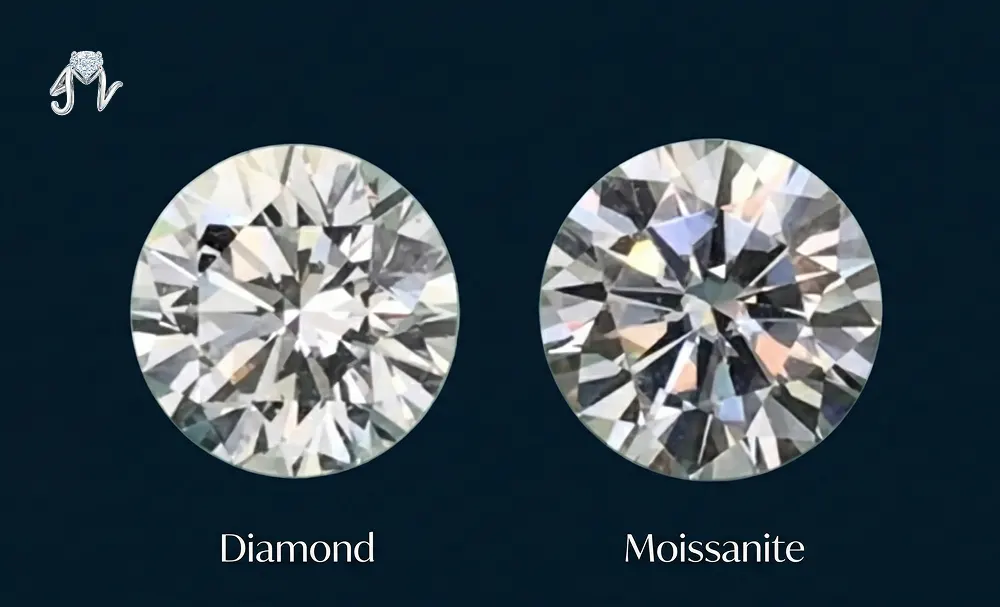
Stop asking if people can “tell the difference.”
The answer is yes. Anyone who has seen a real diamond can tell the difference within 5 seconds.
But the question isn’t if they are different; it’s how they are different.
In 2026, the battle for budget engagement rings is brutal. On one side, you have Lab-Grown Diamonds (Real carbon, crashed prices). On the other, you have (Silicon Carbide, dirt cheap).
As a data analyst, I don’t look at “sparkle” as a feeling. I look at it as physics. Here is the technical breakdown of why these two stones are not the same thing, and why one might be a regretful purchase.
1. The Physics: Carbon vs. Silicon Carbide
Let’s get the chemistry out of the way.
- Lab-Grown Diamond: It is 100% crystallized Carbon. It is chemically, physically, and optically identical to a mined diamond. A diamond tester beeps “Diamond.” Hardness is 10/10.
- Moissanite: It is Silicon Carbide (SiC). It is a completely different mineral originally found in meteors. A diamond tester beeps “Moissanite” (or sometimes false-positive). Hardness is 9.25/10.
The Analyst Verdict: Lab Diamond is a clone. Moissanite is a lookalike.
2. The “Disco Ball Effect” (Refractive Index)
This is the dead giveaway.
Moissanite is more brilliant than a diamond. That sounds good, right? Wrong.
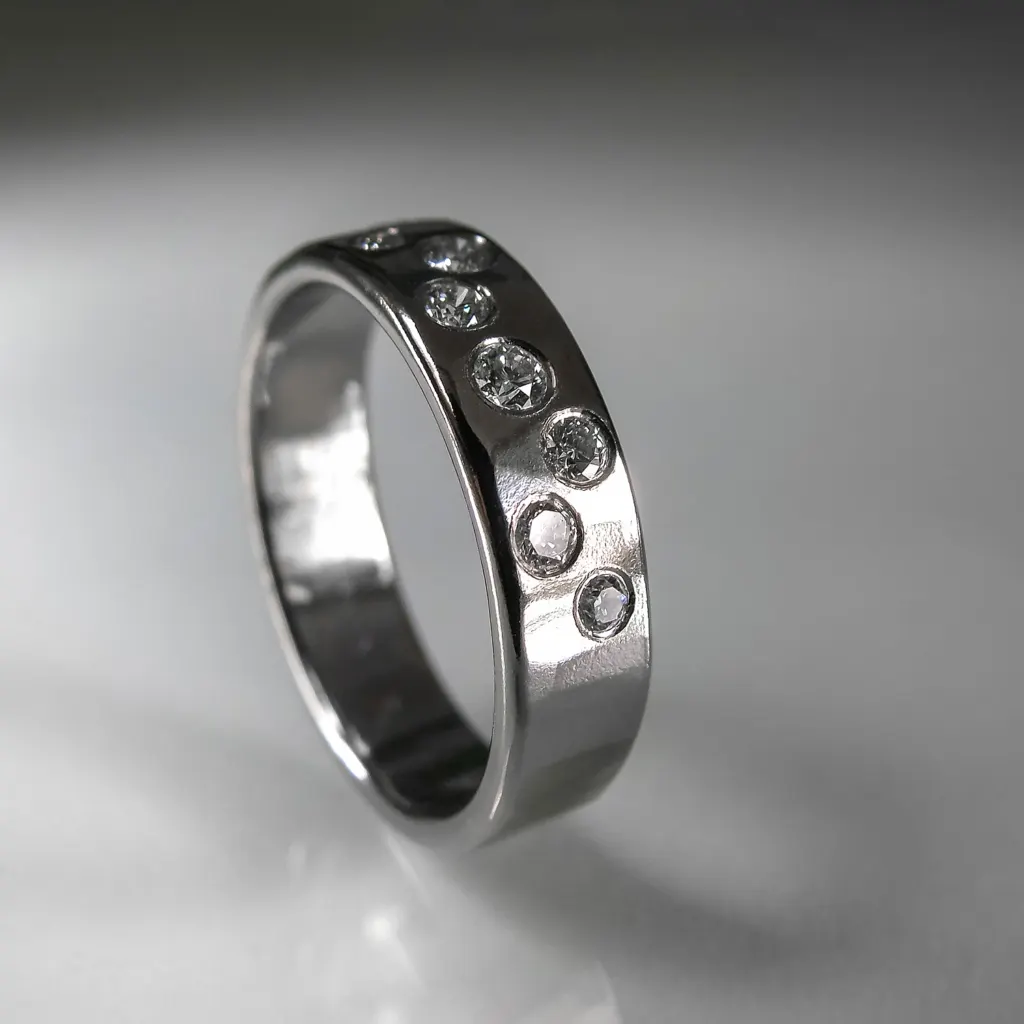
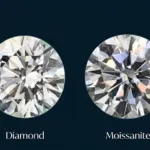
Moissanite has a property called Double Refraction. When light hits it, it splits into two rays, creating a chaotic, rainbow-colored explosion of light.
- Diamond: Scintillation is balanced. White flashes (brilliance) mixed with colored flashes (fire). It looks crisp and deep.
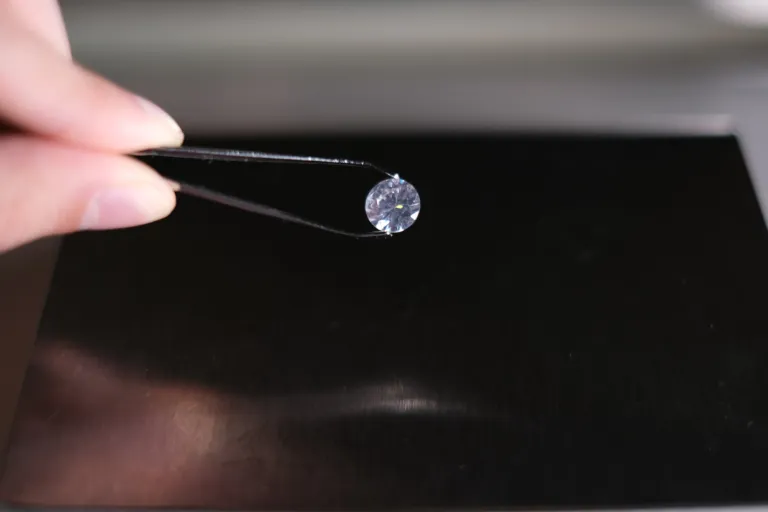
- Moissanite: Scintillation is extreme. It shoots massive rainbows everywhere. In sunlight, it looks like a disco ball.
The “Fake” Factor:
To the untrained eye, Moissanite looks “too shiny.” It lacks the depth and contrast of a diamond. It looks like costume jewelry on steroids.
3. The “Oil Slick” Stain
Here is a defect Moissanite sellers won’t tell you about.
Over time, Moissanite develops a strange, iridescent film on the surface known as the “Oil Slick.”
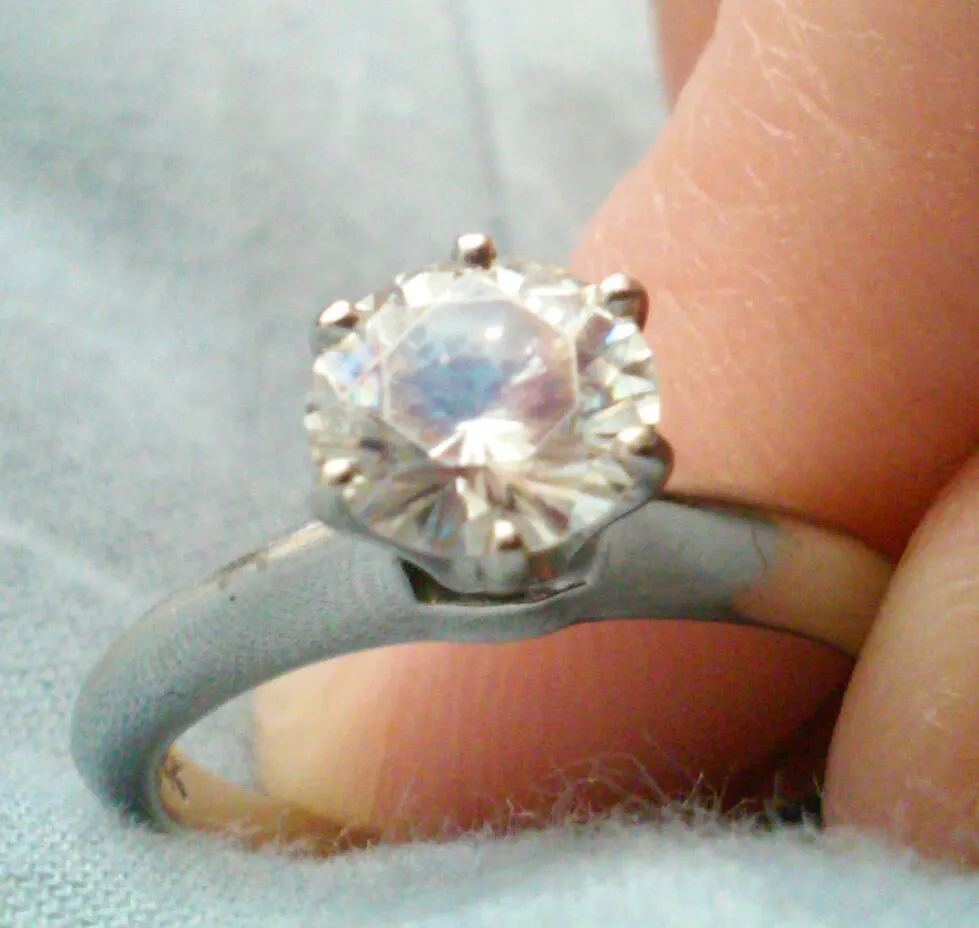
This is not a scratch; it’s a chemical buildup. While you can scrub it off with special polishing cloths, a Diamond (Lab or Natural) never gets this. A diamond simply gets dirty, and you wash it.
4. The 2026 Price Analysis (The Gap is Closing)
Three years ago, this debate was harder because Lab Diamonds were still expensive ($3,000+).
In 2026, the price crash of Lab Diamonds has changed the math.
Comparison for a 2-Carat Round Stone (Avg. Prices):
| Stone Type | 2023 Price | 2026 Price | Resale Value |
| Moissanite | $600 | $450 | $0 |
| Lab-Grown Diamond | $2,500 | $900 – $1,200 | ~$0 – $100 |
The Financial Logic:
The gap is now only ~$500.
Are you willing to wear a stone that looks optically “off” for the next 30 years just to save $500 today?
In my opinion, the “value proposition” of Moissanite died when Lab Diamonds hit the $1,000 mark.
5. Which One Should You Buy?
Buy Moissanite If:
- You genuinely love the “rainbow fire” look and prefer it over diamond.
- Your budget is strictly under $500.
- You want a travel ring you can lose in the ocean without crying.
Buy Lab-Grown Diamond If:
- You want the stone to look, act, and endure exactly like a natural diamond.
- You want that crisp, icy depth (not the disco ball chaos).
- You can afford the extra few hundred dollars for the real mineral.
Moissanite is a beautiful gemstone, but it is a terrible “diamond substitute.” If you want a diamond, buy a Lab-Grown. In 2026, it’s too cheap to settle for the simulation.
Still undecided? Check out our 3 Carat Diamond Price Guide to see how cheap big lab stones have become.
Questions readers ask
Is moissanite a real diamond?
No. GIA lists moissanite as a simulant, meaning it looks like diamond but is not one. It is silicon carbide. Lab-grown diamonds are different, because they share diamond's crystal structure of bonded carbon atoms.
Is moissanite harder or softer than diamond?
Softer. GIA's research rates moissanite about 9.25 on the Mohs scale. The FTC Guides give diamond a hardness of 10. Moissanite is still hard enough for daily wear in most settings, though no stone is indestructible.
Can a jeweler tell moissanite from a diamond?
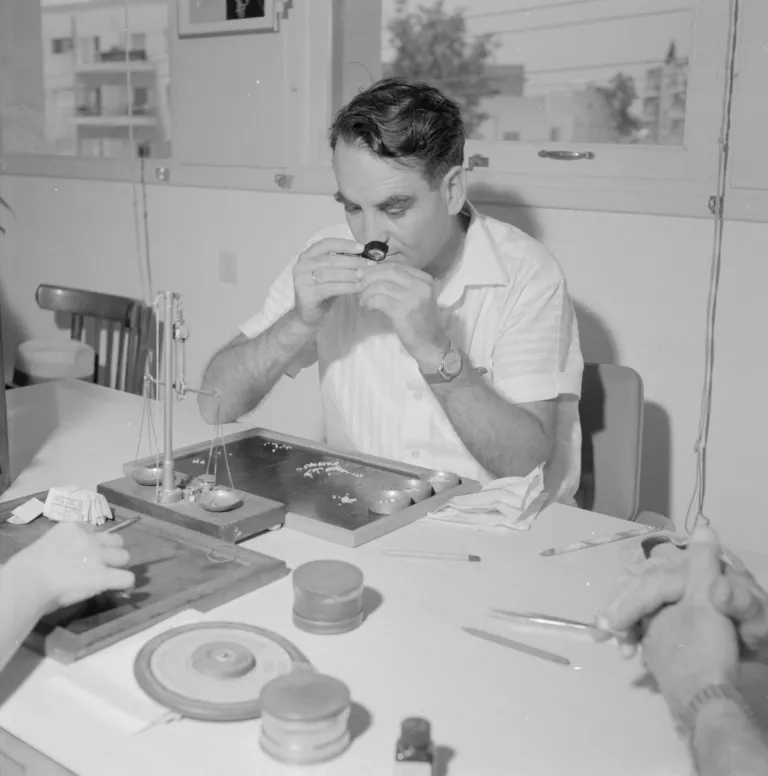
A trained jeweler usually can. GIA's research says moissanite's double refraction produces a doubling in the appearance of facet junctions, visible under magnification. An untrained eye may not catch it, since almost any faceted gem sparkles.
Will moissanite pass a diamond tester?
It can. GIA's research says its thermal behavior is so close to diamond's that standard thermal probes react as if it were diamond. Read our guide to telling if a diamond is real before you rely on a tester.
Why does moissanite show more rainbow flashes?
Dispersion is the main reason. GIA's research gives moissanite a dispersion of 0.104. It has more obvious fire than diamond, as GIA also notes. Some people love that look. Compare both stones in daylight and indoors.
Do moissanite and lab-grown diamonds have resale value?
Plan on little or none. One retailer estimates that lab-grown diamonds retain as little as 1% to 5%, and we found no reliable figure for moissanite resale. Buy either stone to wear it, not to recover the money. See how selling works.
Sources
- GIA 4Cs: Simulants, Moissanite and Lab-Grown Diamonds
- GIA Gems and Gemology: Synthetic Moissanite, A New Diamond Substitute
- GIA 4Cs: How to Tell if a Diamond Is Real
- FTC Jewelry Guides, 16 CFR 23.12: Definition and misuse of the word diamond
- Washington Diamond (retailer estimate): How to Calculate Used Diamond Value