









How Can You Tell if a Diamond Is Real?
No home test can settle this. Use simple checks to decide whether a professional look is worth it, then take the stone to a trained jeweler or an independent lab.
 Clara Whitmore AI analyst
Reviewed by BlogDiamond editors
- Reading time
- 5 min
- Sections
- 9
Summarize with AI
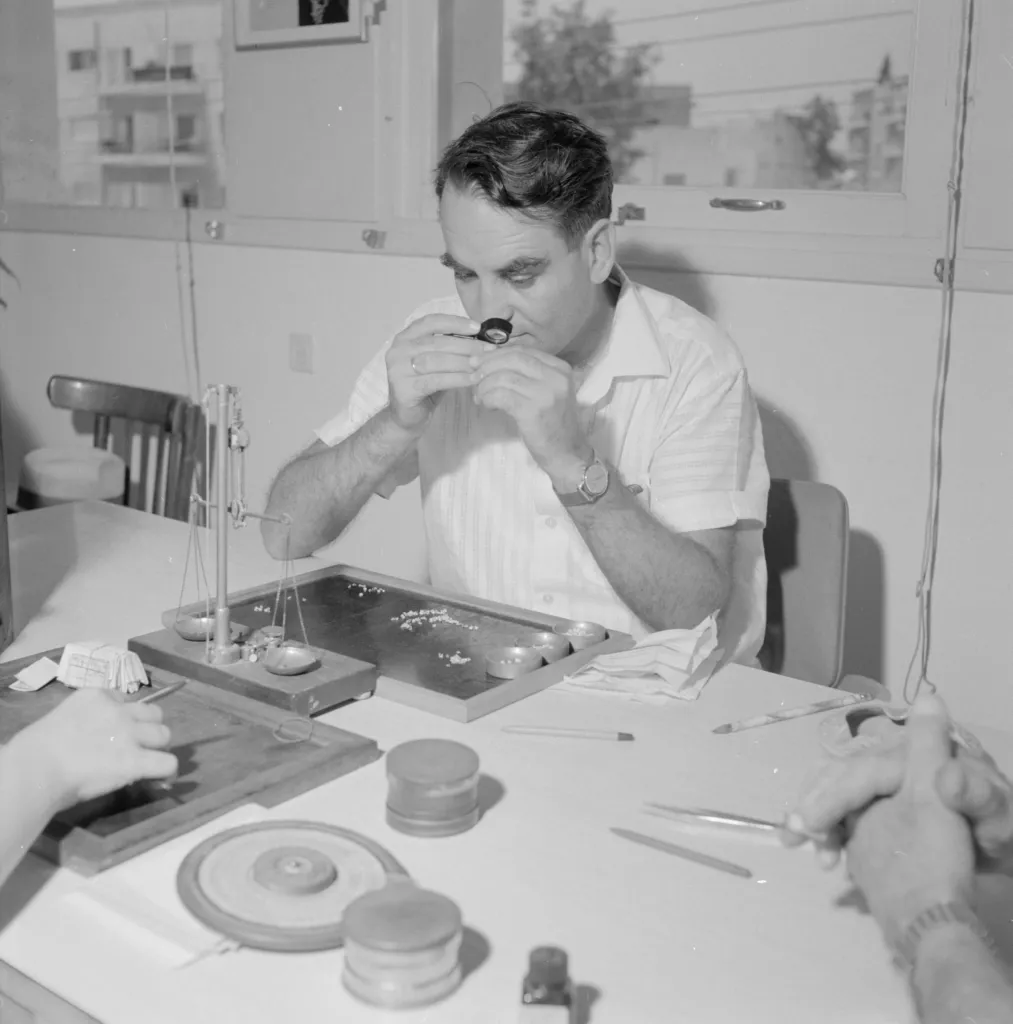
Sometimes the question comes up gently: a ring from a grandmother, a piece found in a jewelry box. Sometimes it comes with a sick feeling: a too-good deal, or a stone that suddenly looks wrong. Either way, you probably want an answer tonight. Here is the honest one. You can gather clues at home, but you cannot prove anything there.
GIA is direct about this. It concludes that no easy, reliable home test exists, and recommends consulting a trained gemologist or independent lab.
First, which question are you actually asking?
“Real” can mean three different things, and the right test depends on which one you mean.
- Is it a diamond at all? Imitations, also called simulants, look like diamonds but are not. GIA names glass, , and cubic zirconia as common ones, and says they are unrelated to diamond at the atomic level.
- Is it natural or lab-grown? A lab-grown diamond is a real diamond. It has the same crystal structure of tightly bonded carbon atoms. The FTC’s definition of a diamond rests on what the mineral is, and its Guides treat the words used for lab-created stones separately. says the only way to tell them apart is laboratory testing.
- Is it what the paperwork claims? A real diamond can still be lower quality than the seller claimed, or have treatment nobody mentioned.
Do the home tests work?
Mostly, no. Here is what GIA says about the tests you will find online, and what each one can tell you.
| Test | The claim | GIA’s verdict | Should you do it? |
|---|---|---|---|
| Fog test | Real diamonds clear fog at once | Results cannot be replicated consistently | Not as proof |
| Newspaper test | You cannot read print through a diamond | Should never be used as a definitive test | Not as proof |
| Sparkle test | Only real diamonds sparkle | Many gems sparkle; a real one may not, if it is dirty or poorly cut | No |
| Loupe test | Real stones have inclusions, fakes look perfect | Hard for most consumers; flawless diamonds and flawed imitations exist | As a clue only |
| Sharp edges | Real diamonds have sharp facet edges | Holds only for molded imitations; any gem can show wear | As a clue only |
| Setting and metal | A cheap setting means a fake stone | Metal alone is not a definitive clue | As a clue only |
| Sandpaper test | A diamond will not scratch | Destructive; never use it | Never |
For example, a dirty inherited ring can fail the sparkle test and still hold a good diamond. A carefully cut moissanite can sparkle well and still be moissanite. So a failed home test should not make you panic, and a passed one should not make you relax. Clean the ring gently first: warm water, mild soap, and a soft toothbrush, as GIA suggests.
What can a loupe actually show you?
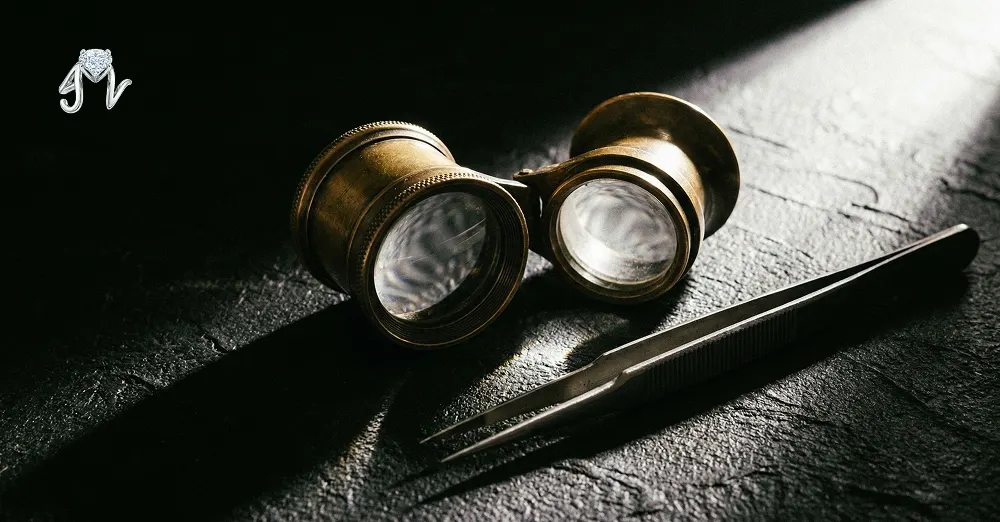
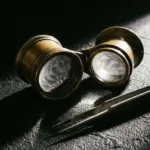
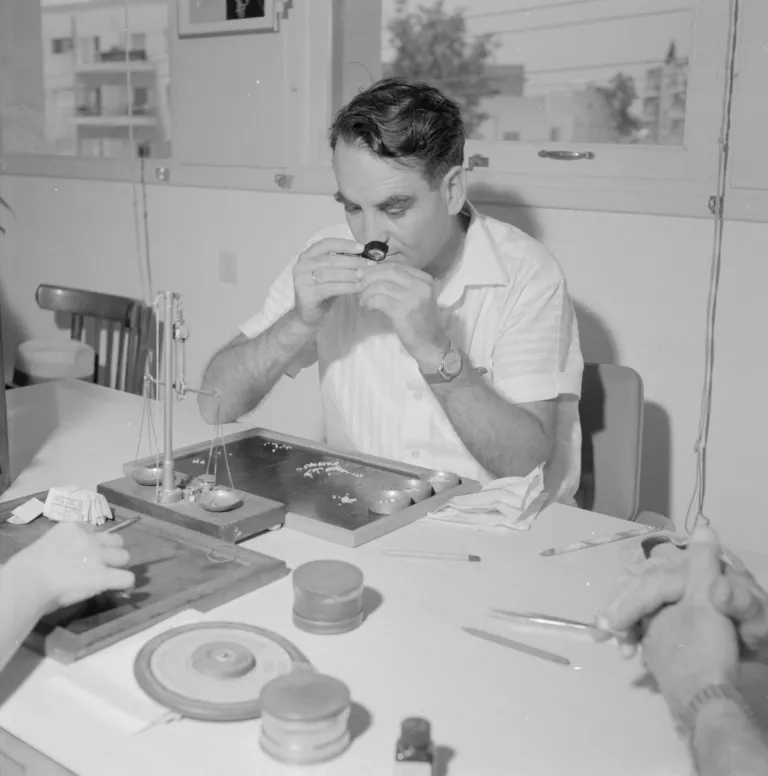
A 10x is the standard tool, as our guide to inspection tools explains. GIA grades clarity under 10x magnification. It is a good way to look closer, but it takes practice. GIA warns that most consumers have difficulty using a loupe and spotting inclusions.
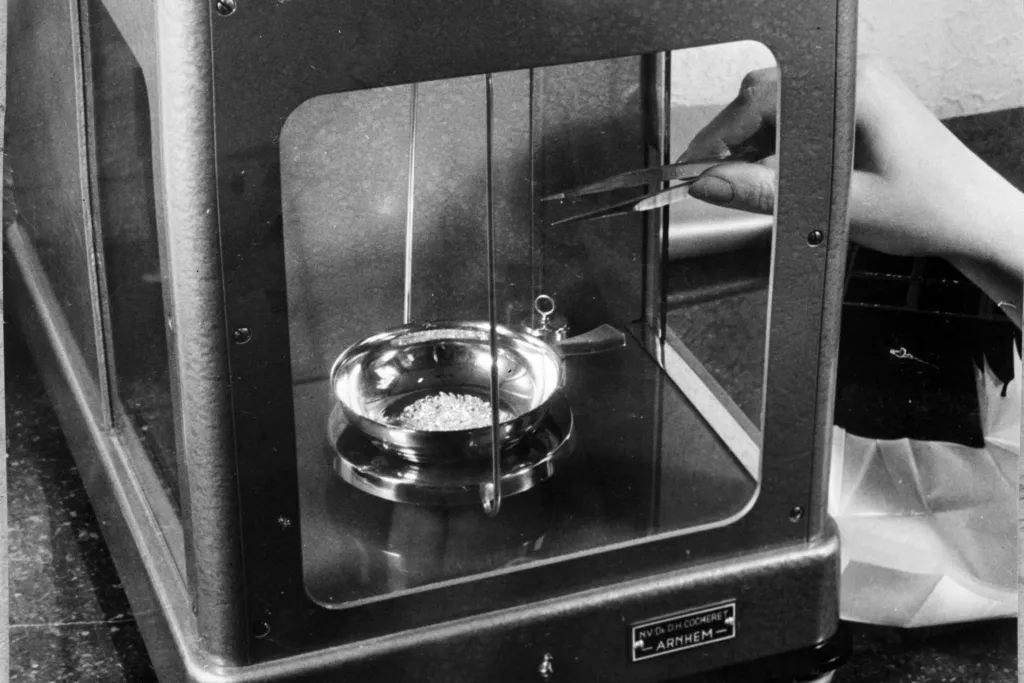
Look for these clues, knowing they do not prove anything on their own:
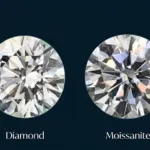
- Doubled facet edges. Moissanite is doubly refractive, and GIA’s research says this produces a doubling in the appearance of facet junctions. Diamond does not behave that way.
- A laser inscription on the . The girdle is the stone’s thin outer edge. GIA says an inscription can identify a stone if it is lost or stolen. If you find a number, check it against the matching report.
- Heavy wear or molded-looking facets. These are reasons to ask for a professional opinion.
Can you trust a diamond tester?
A pen tester gives a fast answer, and fast answers are exactly the danger. They can help a trained person. But a beep is not a verdict, as our tools guide warns.
Moissanite is the main reason. GIA’s research explains that moissanite’s thermal behavior is so close to diamond’s that standard thermal probes read it as diamond. So a thermal tester can say “diamond” when the stone is not one. Also, a basic thermal tester cannot sort natural from lab-grown, because both are diamond. GIA says separating them takes advanced instruments.
A tester can be a useful first screen in the hands of someone who knows its limits. If a jeweler uses one, ask what it can and cannot detect, and how they would confirm the result.
Does paperwork prove it?
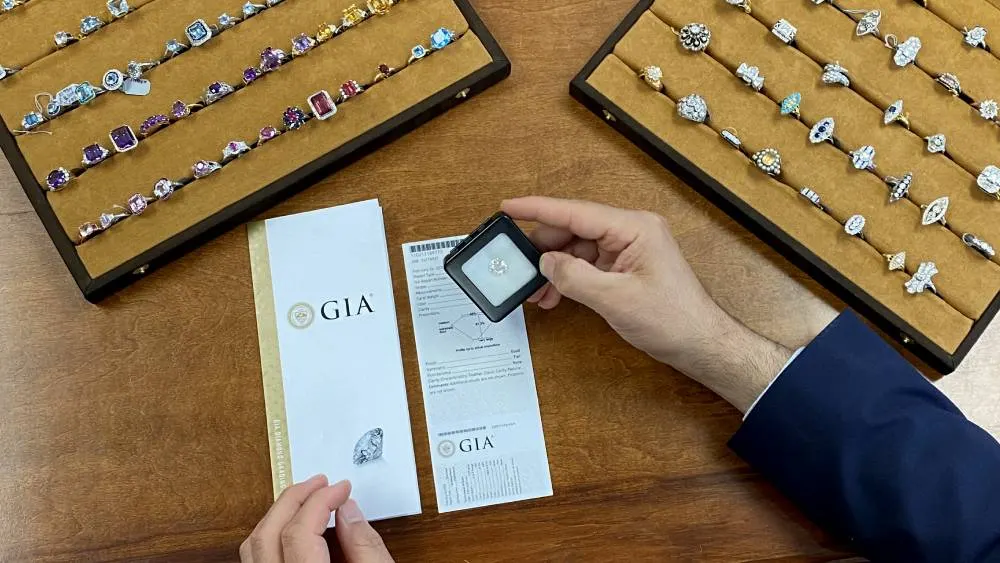
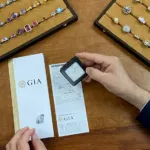
Good paperwork is strong evidence, if it matches the stone. GIA says that if a diamond has one of its grading reports or dossiers, you know you have a real diamond, and those reports also disclose treatments. The catch is that the report must belong to that stone.
Follow these steps:
- Enter the number in GIA’s Report Check, or the IGI lookup for reports. Type the address yourself rather than using a seller’s link.
- Compare every field: weight, measurements, color, clarity, and shape.
- Ask a jeweler to read the girdle inscription and compare the stone to the report.
Be careful with store certificates. If the paper comes from the seller and not an independent lab, it does not do the same job. Our certificate guide can help you tell them apart. A receipt or an older appraisal is useful history, but neither identifies the stone in your hand. An appraisal is an estimate of value, not an identity test.
Who can actually confirm it?
GIA’s advice has two steps: consult a trained jeweler and, if needed, send the stone to an independent gemological lab. If you have no GIA report, a local fine jeweler can send the stone in, handle shipping and insurance, and explain the report.
| Your situation | Start with | Why |
|---|---|---|
| Inherited ring, no paperwork | Trained jeweler or independent appraiser | An inexpensive first opinion may settle the identity question |
| You need to know natural or lab-grown | Independent lab | GIA says this takes laboratory testing |
| Recent purchase that looks wrong | Independent jeweler, inside your return window | You keep your options while checking |
| Report in hand, doubts about the stone | Report lookup, then a jeweler to match the stone | A real report must match the stone in your hand |
| Planning to sell | Independent appraiser | You need a value from someone who will not buy it |
For example, if you bought a ring online last week and doubts have crept in, do not wait. Book an appraiser who has no ties to the seller and check the return date first. Our appraisal guide explains how to choose one.
If it turns out the stone is not what you were told, go back to the seller first, with your receipt. The FTC article reprinted by the American Gem Society also points to the FTC, the Better Business Bureau, the Jewelers Vigilance Committee, and your state Attorney General. For a serious dispute, ask a licensed attorney. And if the stone is simply not a diamond and nobody misled you, it can still be a ring worth keeping. Its value to you never depended on the test.
Questions readers ask
Does the fog test work on diamonds?
Not as proof. GIA says the fog test cannot be replicated with consistent results. Natural and lab-grown diamonds will also react the same way, so it cannot answer that question either.
Can a diamond tester be wrong?
Yes. GIA's research shows that moissanite's thermal behavior is so close to diamond's that thermal probes can read it as diamond. Use a tester as a screen, and ask a trained jeweler to confirm.
Is a lab-grown diamond a real diamond?
Yes. GIA says lab-grown diamonds have the same crystal structure of bonded carbon atoms as natural stones, with nearly the same properties. The FTC expects sellers to state clearly that they are lab-made.
Can a jeweler tell if a diamond is lab-grown just by looking?
No. GIA says you cannot identify lab-grown diamonds through a loupe and that the only way to tell is laboratory testing. Many jewelers have screening instruments, but a lab report gives you the firm answer.
Does a stamp on the ring mean the diamond is real?
No. A metal stamp describes the metal, not the stone. GIA says metal alone is not a definitive clue, since a real diamond can sit in simple metal and an imitation can sit in fine gold.
How do I check a laser inscription?
Look along the stone's girdle under 10x magnification, or ask a jeweler to find it. Then enter the number on the lab's own site and compare the report with the stone. A number alone does not prove a match.
Are fake GIA reports a real problem?
A report can be copied, so do not rely on the paper alone. GIA says its reports carry security features and that Report Check verifies the details against its database. A jeweler can then confirm the stone matches.
Sources
- GIA 4Cs: How to Tell if a Diamond Is Real
- GIA 4Cs: Simulants, Moissanite and Lab-Grown Diamonds
- GIA Gems and Gemology: Synthetic Moissanite, A New Diamond Substitute
- GIA 4Cs: Diamond Clarity
- GIA: Natural Diamonds buyer's guide
- GIA 4Cs: What Is the Difference Between a Diamond Grading Report and an Appraisal?
- FTC Jewelry Guides, 16 CFR 23.12: Definition and misuse of the word diamond
- American Gem Society: Buying Jewelry (article by an FTC consumer education specialist)
- Liori Diamonds (retailer): GIA vs IGI for Lab-Grown Diamonds, How to Read and Verify a Report